INDUSTRIES AT A GLANCE
Lasers & Promotional Products: A Happy Union In Innovation
The world of customizable products is growing faster than ever, bringing a personal touch to items we use every day. From tote bags to mugs and everything in between, we’re surrounded by unique designs featuring our favorite logos, sayings, and franchises. Have you ever wondered what drives this booming trend?
In this edition of our industry series, we’re exploring the transformative role of laser systems in the promotional products space. We’ll uncover how the industry has evolved, where it stands today, and what the future holds. By examining different materials and applications, we’ll reveal how fiber and CO2 laser systems are shaping the market—along with the unique advantages and trade-offs of each technology.
The promotional products industry has seen consistent growth, increasing from $17.7 billion in 2011 to an impressive $26.98 billion today. That’s a 65% jump in demand over the last decade. This surge has fueled a shift toward more detailed, unique, and intricate designs on everyday items, reflecting the evolving preferences of end-users.
If you’re reading this, chances are you’re already a supplier in the industry or considering how to break in. Understanding the tools and technologies that drive this market is crucial—and laser systems are at the heart of it all.
Both CO2 and fiber laser systems play pivotal roles in creating promotional products, but their effectiveness depends on the medium being used. Fiber lasers excel at engraving and marking metals like stainless steel, aluminum, and titanium, as well as certain plastics and ceramics, offering unmatched precision for intricate designs. CO2 lasers, on the other hand, are highly versatile and ideal for non-metallic materials like wood, acrylic, paper, textiles, leather, glass, and even stone. These systems are staples for crafting and customization, enabling businesses to meet a wide range of customer demands.
While fiber laser systems are better suited for industrial and high-tech applications, CO2 systems dominate in the creative and crafting space. Both technologies offer unique opportunities for businesses to diversify their offerings and cater to the growing demand for personalized, high-quality products.
Laser systems have greatly sparked production efficiencies and innovative design around the world. Brands are able to get their product out and diversify their efforts much easier. This leads to expansion and evolution within the ecosystem itself. Let’s take a look further at the type of systems used
Fiber Systems: A Closer Look
What do fiber laser systems bring to the promotional products industry? In short, they do a lot. Fiber laser systems are highly specialized tools that excel in precision engraving and marking, especially on metals.
How Fiber Lasers Work
Fiber lasers generate a laser beam using a diode laser as the source. This beam is then amplified and transmitted through a fiber optic cable, which is typically doped with rare-earth elements such as ytterbium to enhance the laser’s intensity. The result is a highly focused and powerful beam with a small plot size, allowing for exceptional precision and clarity in engraving.
Key Strengths of Fiber Lasers
Fiber laser systems are the preferred choice for working with a variety of metals, due to their precision and durability. Common materials that fiber lasers excel at include:
- Stainless Steel: Ideal for detailed engravings that resist wear and corrosion.
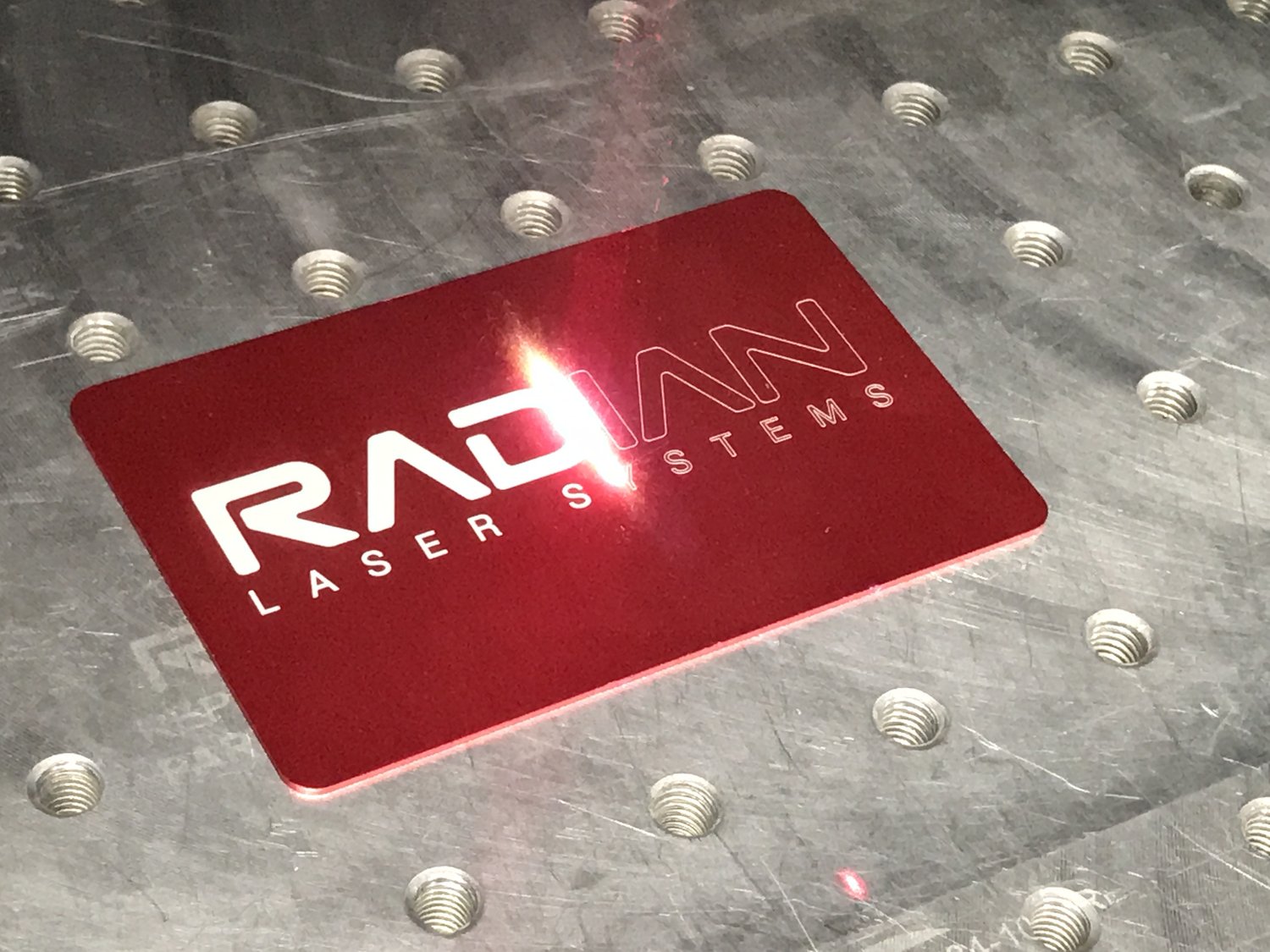
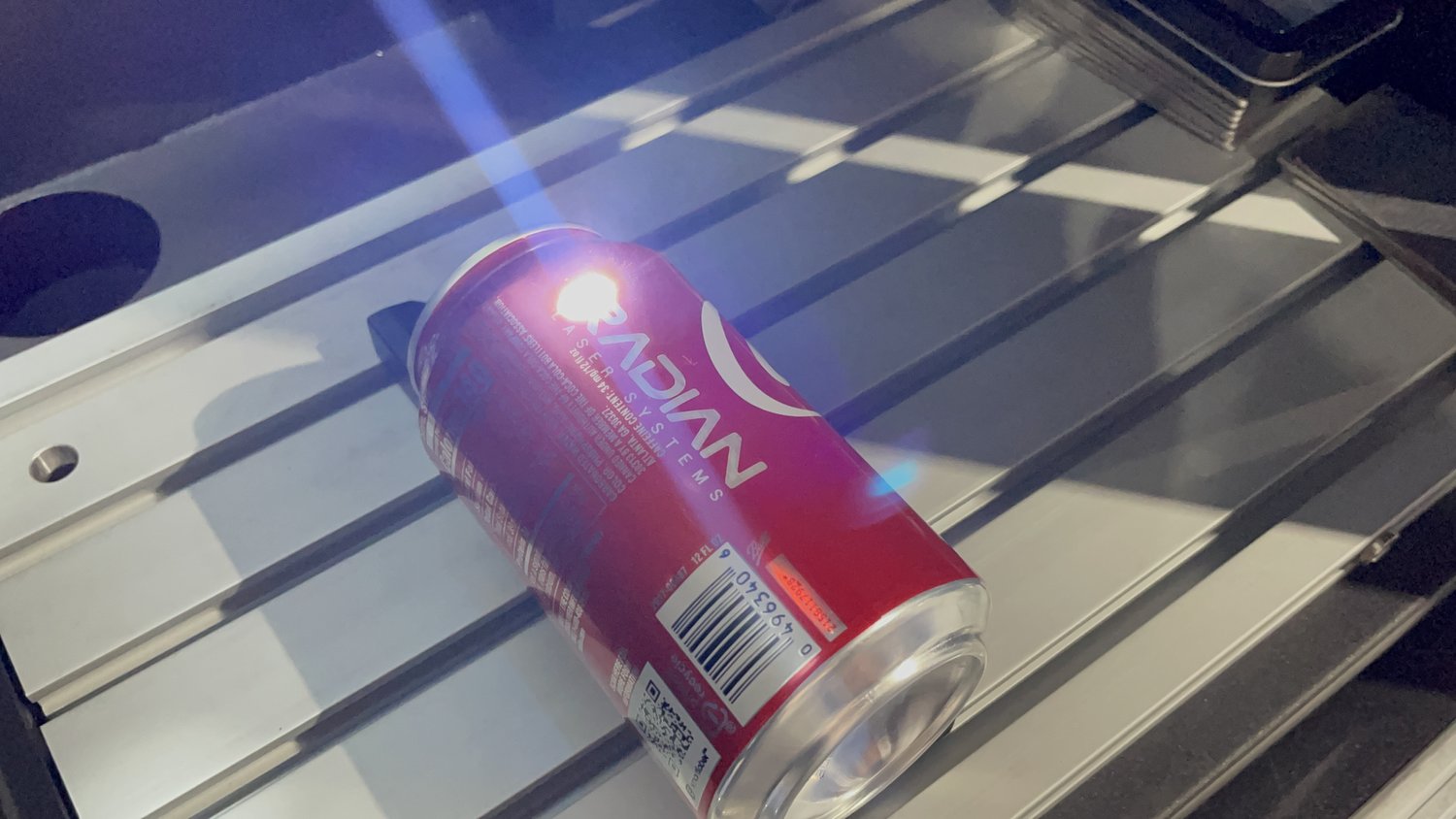
- Aluminum: Produces crisp, high-contrast markings.
- Titanium: Frequently used in industrial and medical applications, offering permanent, high-quality marks.
- Gold and Silver: Perfect for jewelry and high-end promotional items.
- Brass: Popular for intricate and decorative designs.
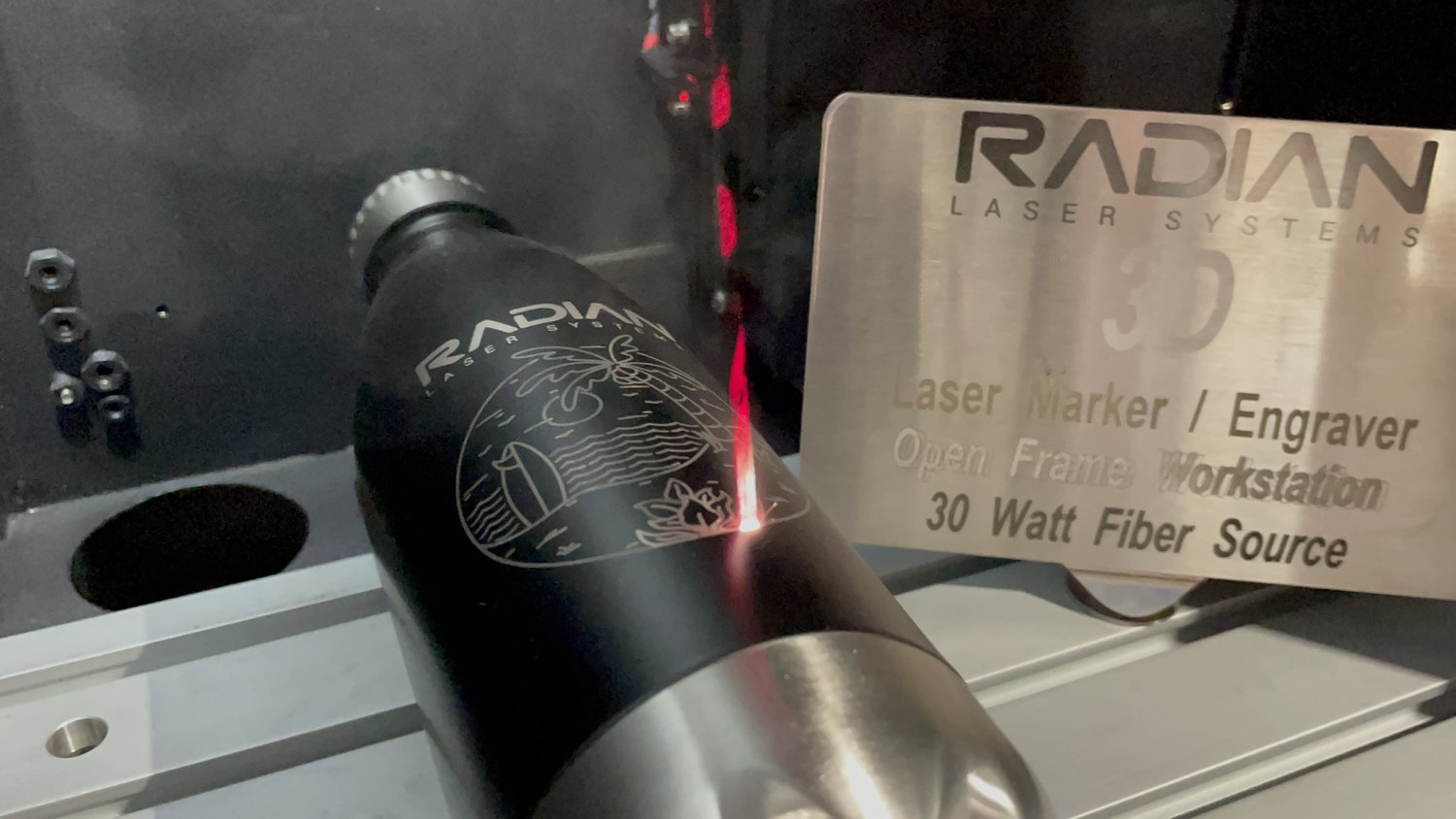
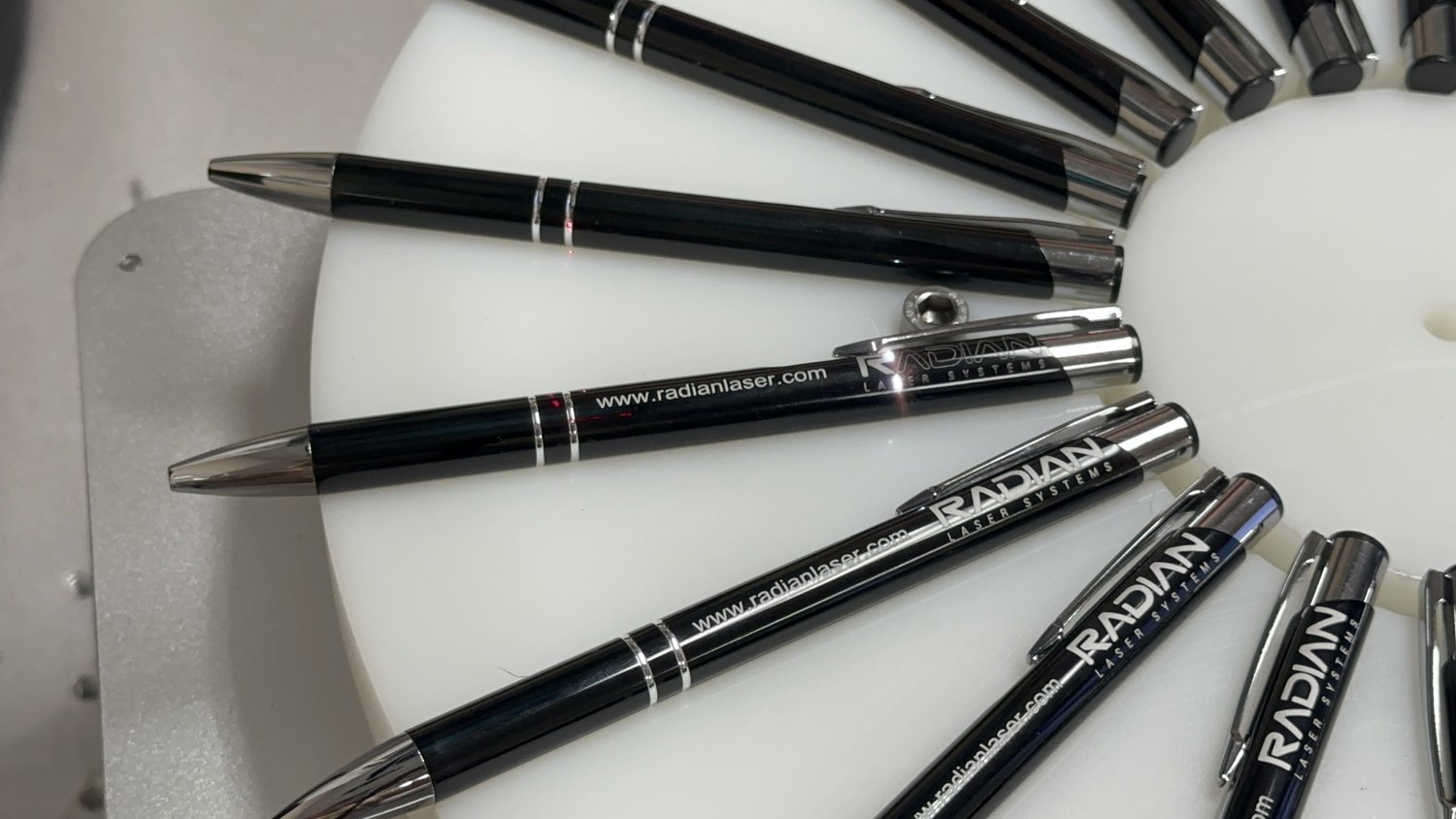
The standout feature of fiber lasers is their ability to create deep, permanent engravings that can withstand harsh environments. This makes them an excellent choice for promotional products designed for long-term use, such as branded tools, keychains, or luxury items.
CO2 Laser Systems: A Closer Look
CO2 laser systems are versatile powerhouses in the promotional products industry, offering flexibility and precision for a wide range of materials. Known for their ability to cut, engrave, and mark non-metallic surfaces, CO2 lasers are the go-to choice for creating personalized, intricate designs on a variety of substrates.
How CO2 Lasers Work
CO2 lasers generate a laser beam by exciting a mixture of carbon dioxide gas, nitrogen, and helium with an electric current. This process produces a highly focused infrared laser beam with a wavelength of 9.3-10.6 µm, which is well-suited for materials that absorb this wavelength, such as wood, acrylic, and textiles. The laser is
directed to the work surface using a series of mirrors and lenses, allowing for precise and detailed cutting or engraving.
Efficiency and Maintenance
CO2 laser systems require more maintenance than fiber lasers due to the use of mirrors and lenses in their beam delivery system, which can become misaligned over time. Regular cleaning and occasional adjustments are necessary to maintain performance. However, modern CO2 lasers are increasingly user-friendly, with automated features that reduce downtime and simplify operations.
Key Strengths of CO2 Lasers
CO2 lasers stand out for their versatility and ability to work with a broad spectrum of non-metallic materials, including:
- Wood: Ideal for creating intricate patterns, logos, and text on items like cutting boards, plaques, or keychains.
- Acrylic: Produces smooth, polished edges for signage, awards, and decorative items.
- Paper and Cardboard: Perfect for custom packaging, invitations, and promotional displays.
- Textiles: Enables cutting and engraving on fabrics for apparel, tote bags, and more
- Leather: Great for engraving or cutting custom designs on wallets, belts, and bags.
- Glass: Creates frosted effects for drinkware, awards, and decorative items.
- Stone: Adds elegant engravings on tiles, coasters, or awards.
- This versatility makes CO2 laser systems indispensable for businesses looking to cater to diverse customer demands with a wide variety of promotional products.
Limitations of CO2 Lasers
While CO2 lasers excel in working with non-metallic materials, they are less effective on metals without the use of special coatings or additives. Additionally, the cutting speed and depth may vary depending on the material’s density, requiring adjustments for optimal performance.
Applications in the Promotional Products Industry
CO2 lasers are widely used for
Signage: Crafting custom acrylic or wood signs with crisp edges and polished finishes.
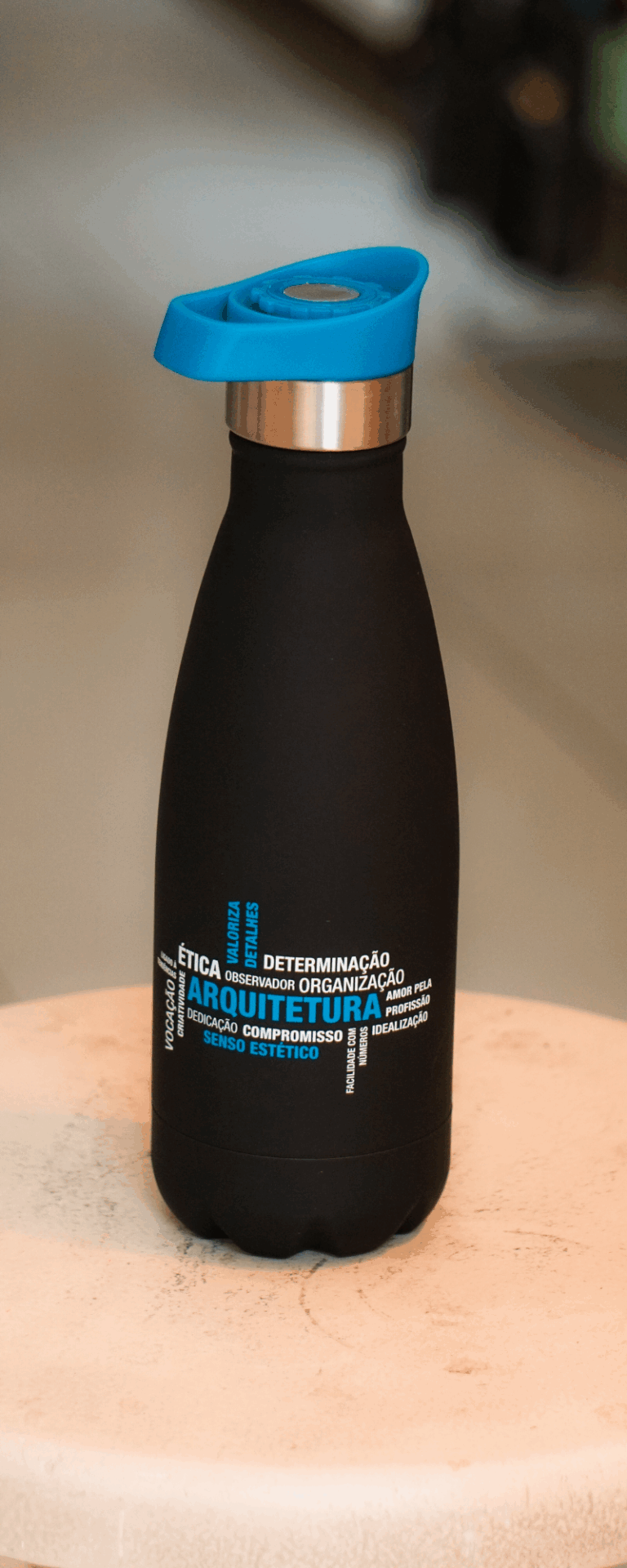
- Drinkware: Engraving logos or designs on glass mugs, tumblers, and bottles.
- Apparel: Cutting and engraving patterns on leather or fabric items.
- Awards and Recognition: Creating detailed engravings on plaques, trophies, and medals.
- Packaging: Producing custom-cut and engraved boxes, tags, and promotional displays.
CO2 laser systems are an essential tool for creating personalized promotional products that stand out. Their ability to handle intricate designs on diverse materials gives businesses a creative edge, making them a cornerstone of customization and branding efforts.
Gantry 2D vs. Galvo 3D Lasers: Understanding The Differences

Laser systems come in various configurations, each tailored to specific applications and industries. Among the most common setups in the promotional products space are Gantry 2D lasers and Galvo 3D lasers. While both serve essential purposes, their differences in operation, capability, and application make each suited for distinct tasks.
Gantry 2D Lasers
How They Work
Gantry 2D lasers operate by physically moving the laser head along an X and Y axis, controlled by a gantry mechanism. The laser beam remains at a consistent focal point, and the workpiece typically stays stationary during operation.
Key Features
Wide Working Area: Gantry systems are ideal for larger projects due to their expansive work area, making them suitable for engraving or cutting large-scale designs.
High Precision: The slower movement of the gantry allows for detailed and accurate engraving or cutting
Applications:
Engraving large promotional items or signage.
Cutting intricate designs for custom products.
Batch processing for flat items like coasters or sheets.
Limitations
Slower Speed: The mechanical movement of the gantry limits processing speed, making it less suitable for high-volume production.
Limited to 2D: The laser beam focuses on a flat surface, making it unsuitable for engraving or cutting on uneven or 3D objects.
Galvo 3D Lasers
How They Work
Galvo 3D lasers utilize high-speed, motorized mirrors (galvanometers) to direct the laser beam across the work surface. This allows the laser to move at incredible speeds without physically repositioning the laser head. In a 3D configuration, the laser can dynamically adjust its focus to accommodate curved or uneven surfaces.
Limitations
Smaller Work Area: Limited to compact projects due to the fixed focal length and scanning range.
Initial Cost: Higher upfront investment compared to gantry systems.
By understanding the differences between these systems, businesses can select the right laser technology to optimize productivity, meet customer demands, and explore new possibilities in the promotional products space.
Key Features
High Speed: The use of galvo mirrors enables rapid processing, making it ideal for high-volume production.
3D Capability: Dynamically adjusts the focal point, allowing it to mark or engrave on curved, sloped, or irregular surfaces with precision.
Ease of Use: Radian’s 3D Marking application simplifies the setup process for marking on curved objects, enabling users to achieve seamless results with minimal effort.
Compact Work Area: Typically has a smaller marking field compared to gantry systems but excels in speed and versatility.
Applications
Engraving or marking on cylindrical or curved objects.
High-speed serialization, barcoding, and logo marking.
Creating detailed designs on 3D surfaces.
Choosing the Right System
The choice between Gantry 2D and Galvo 3D lasers depends largely on your application and production needs:
Gantry 2D Lasers: Ideal for businesses that prioritize precision and need to handle larger workpieces with moderate production speed requirements.
Galvo 3D Lasers: Best for high-speed production, intricate designs, and marking on irregular or curved surfaces.
With innovative tools like Radian’s 3D Marking application, working with curved objects becomes even more straightforward, providing a significant advantage for businesses looking to explore 3D capabilities.
Enter: Radian
Now that we’ve provided all this information, it might seem simple to say, “Just find a machine that works for you,” right? But in reality, not all laser systems are created equal. Within the promotional products industry, Radian Laser Systems has established itself as a trusted partner, delivering high-quality finishes and significantly improved production speed for our clients.
Our machines are designed to give you a competitive edge, with superior processing modules that reduce lead times and increase throughput. Whether you’re using a CO2 or fiber laser, Radian systems are built to excel in efficiency and reliability. For example, while standard industry models typically rely on lower-end components, Radian units are equipped with the industry’s highest-quality components. This commitment to excellence ensures higher performance, allowing you to handle larger volumes without compromising on quality.
One of our standout innovations is Luminate, our newest laser system, designed specifically to push the boundaries of laser marking and engraving. Luminate combines advanced precision, enhanced software compatibility, and unmatched versatility. Its state-of-the-art API allows seamless integration with industrial software and automation systems, enabling businesses to streamline workflows, monitor performance in real-time, and achieve superior results with minimal effort. With its sleek design and user-friendly interface, Luminate is built to deliver consistent, exceptional performance for modern industry needs.

Conclusion:
After exploring the key differences between laser systems, you should now have a clearer idea of which solution best suits your needs. While we didn’t delve deeply into UV lasers in this article (primarily because their most common application is for glass surfaces), most promotional product manufacturers will find themselves choosing between a CO2 or fiber laser system. Understanding the capabilities of these systems and how they align with your job requirements is crucial to optimizing your workflow and achieving exceptional results.
At Radian Laser Systems, we’re here to help you make the right decision. Our team is dedicated to providing cutting-edge technology, expert advice, and personalized solutions to meet your business needs. If you have any questions about laser marking, engraving, or our innovative Luminate system, don’t hesitate to reach out to our sales team. Let us help you take your business to the next level.